What Makes a Good Pasture in Colorado? Soil, Water, Drainage, and Management Quick Answer
What Makes a Good Pasture in Colorado? Soil, Water, Drainage, and Management
Quick Answer
Good pasture in Colorado usually comes down to four things: soil, water, drainage, and management. A property can have beautiful green grass today and still require significant work if the soil is compacted, water is limited, drainage is poor, or the land has been overgrazed.
For buyers considering a horse property, agricultural property, or rural acreage near Denver, the goal is not simply to find land that looks green. It is to understand what the pasture can realistically support and how that fits your plans.
What should you look for when evaluating pasture land in Colorado?
When clients walk a rural property, pasture is often one of the first things they notice. Green grass, fencing, open space, and a few horses can create an immediate impression.
But pasture condition is more complicated than appearance.
A useful evaluation starts with four questions:
- What kind of soil is here?
- Where does the water come from?
- How does water move across and through the property?
- How has the pasture been managed?
Those questions can tell you much more than the color of the grass on the day you visit.
This is particularly important in Colorado, where conditions can vary considerably between properties. A pasture near the Denver metro area may have very different soil, irrigation, elevation, precipitation, and growing conditions than one farther east, north, or toward the foothills.
Colorado State University Extension recommends looking at factors such as carrying capacity, grazing patterns, recovery periods, forage condition, and grazing records when evaluating small-acreage pasture.
How important is soil quality for Colorado pasture?
Soil is the foundation of a pasture.
It influences how well grass grows, how much water the soil can hold, how quickly water infiltrates, and how easily plant roots can access nutrients and oxygen.
When evaluating a property, it can be useful to learn:
- Soil type and texture
- Soil depth
- Organic matter
- Drainage characteristics
- Compaction
- Potential salinity issues
- Presence of restrictive or hardpan layers
- Existing nutrient levels
A sandy soil may allow water to move relatively quickly, while clay-heavy or compacted soil can hold water for longer periods. Neither condition automatically makes a property unsuitable. What matters is how the soil characteristics interact with your intended use.
For example, a horse owner may have different priorities than someone raising hay or livestock.
A soil test can provide information that is difficult to determine simply by walking the property. CSU Extension recommends testing before applying fertilizer so that amendments can be based on actual nutrient needs rather than guesswork.
What does pasture soil look like when there is a problem?
Watch for areas where grass is consistently thin, bare, yellowing, or struggling.
Also look for:
- Standing water after irrigation or rain
- Compacted areas around gates
- Mud near water tanks
- Bare ground along heavily traveled paths
- Uneven grass growth
- White or crusty areas that may indicate salt accumulation
These signs do not necessarily tell you exactly what the problem is. They do, however, give you good reasons to investigate further.
How important is water for pasture in Colorado?
Water can be one of the most important questions when evaluating rural Colorado land.
Some properties rely primarily on precipitation. Others have irrigation rights, irrigation ditches, wells, surface water, or a combination of sources.
The important distinction is that having water on or near a property does not automatically mean you have the legal or practical ability to use it for pasture.
If irrigation is important to your plans, investigate the actual water rights, permits, infrastructure, historical use, and restrictions associated with the property.
This is an area where real estate due diligence can become much more detailed than simply asking whether a property is "irrigated."
For example, you may want to understand:
- What type of water right exists?
- Is the water right transferable?
- What land can it serve?
- Is the irrigation system functional?
- Is there a ditch or lateral involved?
- Who maintains the infrastructure?
- What are the historical irrigation practices?
- Are there costs or assessments?
- Does the water source reliably meet your intended use?
Colorado State University Extension also notes that irrigation water quality can affect plant productivity, soil conditions, and how irrigation systems perform. Testing water can help identify concerns involving salinity, sodium, pH, and other factors.
If you are considering rural land as an investment or lifestyle purchase, water deserves the same level of attention as the house, barn, fencing, or acreage.
How does drainage affect pasture quality?
Good pasture needs water, but too much water in the wrong place can create problems.
Drainage affects soil oxygen, root development, trafficability, and plant health. CSU Extension notes that poorly drained soils can become saturated or waterlogged, limiting root activity and contributing to plant decline.
When touring a property, pay attention to the low points.
Ask yourself:
- Where does rainwater collect?
- Are there areas that stay muddy?
- Does water move toward the barn or home?
- Are there drainage channels?
- Does irrigation pool in certain areas?
- Are there signs of erosion?
- Does the pasture dry evenly?
If possible, visit the property after rainfall or irrigation. A property can look very different when the ground is wet.
Drainage also matters for horse properties because consistently wet or muddy areas can become difficult to manage, especially around gates, shelters, water sources, and high-traffic areas.
What does irrigation tell you about a Colorado pasture?
Irrigation can make a meaningful difference, but the presence of an irrigation system is only the beginning of the conversation.
Look at the entire system.
That might include:
- Ditches
- Headgates
- Pumps
- Sprinklers
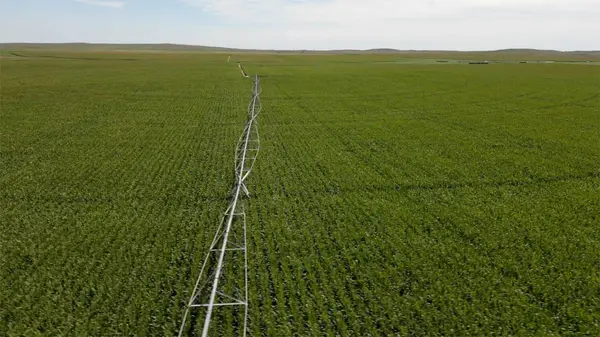
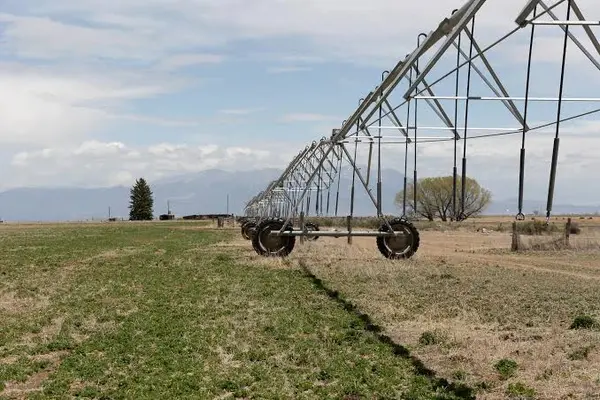
- Pivots
- Pipes
- Irrigation ponds
- Distribution systems
- Drainage outlets
Then consider the condition and practicality of each component.
A property may have an irrigation system that technically works but requires substantial maintenance or hands-on management. Another property may have valuable water rights but outdated infrastructure.
Those differences matter when deciding whether a property fits your lifestyle, budget, and management preferences.
How does grazing management affect pasture quality?
Even good soil and adequate water cannot completely compensate for poor grazing management.
Animals naturally spend more time eating plants they find most appealing. If the same areas are repeatedly grazed without sufficient recovery, desirable forage can become stressed while less desirable plants have more opportunity to spread.
Colorado State University Extension recommends allowing pasture recovery between grazing periods and using carrying capacity, grazing records, and rotational strategies to manage available forage.
This is one reason a pasture should not be judged only by how it looks when you arrive.
Ask about its history.
What questions should you ask about an existing pasture?
If you are buying a property with established pasture, consider asking:
- How many animals have been kept here?
- What type of animals?
- How many months per year were they grazing?
- Was the pasture irrigated?
- How frequently was it rested?
- Has fertilizer been applied?
- When was the last soil test?
- Have weeds or toxic plants been an issue?
- Has the pasture ever been reseeded?
- Are there areas that regularly become muddy?
- Has the property experienced drought-related pasture damage?
The answers can help you understand the difference between a pasture that simply looks good today and one that has a management history that aligns with your plans.
How much pasture do horses need in Colorado?
There is no single acreage number that works for every horse property.
The appropriate amount depends on forage productivity, irrigation, soil, precipitation, horse numbers, animal size, grazing duration, supplemental feed, and management.
For example, two five-acre properties may function very differently. One might have productive irrigated pasture with good fencing and a thoughtful rotation system. Another might have dryland grass, limited forage, and areas of significant compaction.
Colorado State University Extension provides different production considerations for irrigated pasture and emphasizes matching animal demand with forage supply rather than relying on acreage alone.
That is an important distinction for anyone shopping for a horse property.
Acreage is not the same thing as usable pasture.
What is the difference between dryland and irrigated pasture in Colorado?
Dryland pasture depends primarily on natural precipitation and stored soil moisture.
Irrigated pasture has access to additional water, which can support greater forage production when the water supply, soil, and management system are appropriate.
That does not mean irrigated pasture is automatically the right choice for every buyer.
Irrigation can bring additional infrastructure, maintenance, water-right considerations, and management responsibilities.
Dryland acreage may be attractive to someone who wants more open space and fewer irrigation responsibilities, while an equestrian owner who wants to produce more of their own forage may place greater importance on irrigated ground.
What matters most depends on your goals.
How should buyers evaluate a horse property near Denver?
For buyers looking at horse properties around Denver and the surrounding communities, I recommend evaluating the property as a complete system.
Look beyond the house.
Consider:
Pasture:
Is there usable grazing ground, and how productive does it appear to be?
Water:
What water is available for domestic use, livestock, irrigation, and other intended purposes?
Fencing:
Is the fencing appropriate for your animals, and what condition is it in?
Barn and shelters:
Are the structures functional for your intended use?
Access:
Can trailers, hay deliveries, and equipment move comfortably around the property?
Zoning and land use:
Does the property's zoning and local regulation support your intended livestock, agricultural, equestrian, or residential use?
Drainage:
Are there areas that stay wet, erode, or become difficult to access?
Utilities:
What is available for electricity, septic, wells, internet, and other needs?
This is where rural real estate differs from evaluating a typical suburban home.
You are not simply buying a house. You may be buying a combination of land, infrastructure, water, improvements, and legal rights.
If you want to explore available properties, you can start here: Your Wunder Home
Can pastures be improved after buying a property?
Often, yes, but the cost and effort can vary considerably.
Improvements might include:
- Reseeding
- Fertilization based on soil testing
- Weed management
- Better grazing rotation
- Rest periods
- Improved fencing
- Irrigation repairs
- Drainage improvements
- Soil management
- Creating a sacrifice area
The important question is not simply whether pasture can be improved. It is whether the expected improvement fits your budget, timeline, and intended use.
For example, a buyer may be comfortable purchasing acreage that needs pasture rehabilitation because the property has other features they value.
Another buyer may prefer land that is ready to use immediately.
Neither approach is automatically right. It depends on priorities.
What should sellers know about pasture before listing rural property?
Sellers can also benefit from understanding what makes their land useful.
If you are preparing to sell a Colorado horse property or agricultural property, gather documentation before listing when possible.
Useful information may include:
- Water rights
- Irrigation records
- Well information
- Soil tests
- Pasture management records
- Fencing details
- Barn and outbuilding information
- Zoning information
- Agricultural use history
- Easements
- Survey information
Having this information organized can make it easier for prospective buyers to understand what the property offers and what additional investigation may be appropriate.
Some clients like to begin with the broader picture of their property goals before deciding what information they need to gather. You can start here: Your Wunder Home
Why does pasture evaluation matter for rural land buyers?
Pasture is one piece of a much larger rural property equation.
A property may have beautiful acreage but limited water. Another may have excellent irrigation but challenging drainage. A third may have productive pasture but zoning or access considerations that affect how the land can be used.
This is why we encourage buyers to slow down and evaluate the property based on the lifestyle they actually want.
If your goal is horses, think about horses.
If your goal is agricultural production, think about production.
If your goal is simply more space and privacy, your priorities may be different.
The land does not have to meet someone else's definition of "good." It needs to make sense for the way you intend to use it.
A Practical Colorado Pasture Checklist
Before purchasing rural or equestrian property, consider investigating:
- Soil: What type of soil is present, and has it been tested?
- Water: What water sources and legal rights are associated with the property?
- Irrigation: Is irrigation available, and is the infrastructure functional?
- Drainage: Where does water collect or leave the property?
- Forage: What grasses and plants are present?
- Grazing history: How has the pasture been used and managed?
- Carrying capacity: What can the land realistically support?
- Fencing: Is it appropriate for the intended livestock?
- Zoning: What agricultural, livestock, residential, or equestrian uses are permitted?
- Access: Can vehicles, trailers, and equipment reach the areas that need service?
- Infrastructure: What barns, shelters, wells, septic systems, and utilities are already in place?
- Future plans: Will the property still work if your needs change?
The goal is not to find a property with zero imperfections. Rural properties rarely work that way.
The goal is to understand the land well enough to make a decision that fits your priorities.
Final Thoughts
Buying rural land, a horse property, or agricultural acreage around Denver is about more than counting acres.
Soil, water, drainage, forage, zoning, infrastructure, and management all contribute to how useful the land may be for your particular goals.
Everyone defines a "good pasture" differently. What matters most depends on whether you want horses, livestock, agricultural production, recreation, privacy, or simply more room to enjoy rural Colorado.
We believe good real estate decisions start with good questions.
If you're thinking about buying or selling land, a horse property, or a rural home in the Denver area, we're happy to be a resource. No pressure, just guidance when you need it.
FAQ: Colorado Pasture and Horse Property
What makes good pasture land in Colorado?
Good pasture generally combines suitable soil, adequate water, appropriate drainage, productive forage, and management that allows plants to recover between grazing periods. The right combination depends on the property location, climate, animal type, and intended use.
How do you evaluate pasture for a horse property in Colorado?
Start by looking at soil, forage condition, water availability, drainage, fencing, grazing history, and carrying capacity. Then investigate zoning, water rights, irrigation infrastructure, access, and other property-specific considerations.
How much water does pasture need in Colorado?
Water needs vary based on grass species, soil, temperature, elevation, precipitation, and management. Irrigated pasture can have different production potential than dryland pasture, but irrigation availability should be evaluated together with the property's actual water rights and infrastructure.
Is irrigated pasture better than dryland pasture?
Not necessarily. Irrigated pasture may support greater forage production, but it can also involve additional water rights, infrastructure, maintenance, and management considerations. The appropriate choice depends on what you want the property to accomplish.
Can poor pasture be improved?
In many cases, pasture can be improved through better grazing management, rest periods, weed control, reseeding, soil amendments, irrigation improvements, or drainage work. The practical question is how much time and money those improvements will require compared with purchasing property that already meets your needs.
Categories
Recent Posts